
Vietnamese coffee prices have been sliding for months now, down roughly 40 percent since April last year. For traders and farmers holding on to their beans in the hopes of higher prices, their woes are now being compounded by input costs driven higher by the war in Iran.
Vietnamese coffee exports hit almost US$9 billion dollars last year, nearly 60 percent higher than in 2024.
A jump that big, in the near term, however, is unlikely to be seen again with London Robusta Coffee Futures’ prices down roughly 40 percent from this time a year ago.
At face value, this drop in prices might seem like a red flag. They have, however, come down from an abnormally high base, Hao Qiu, the founder and operator of Fair Farm Vietnam, a specialty coffee producer in Vietnam’s Central Highlands, told the-shiv.
He said a failed crop two years ago in Brazil was responsible for pushing prices to record highs, with prices now moving more toward their historical average.
Indeed, a tonne of coffee on the London exchange averaged roughly US$2,087 a tonne over the 2020 to 2023 period, but then more than doubled to US$4,204 in 2024, followed by US$4,573 in 2025.
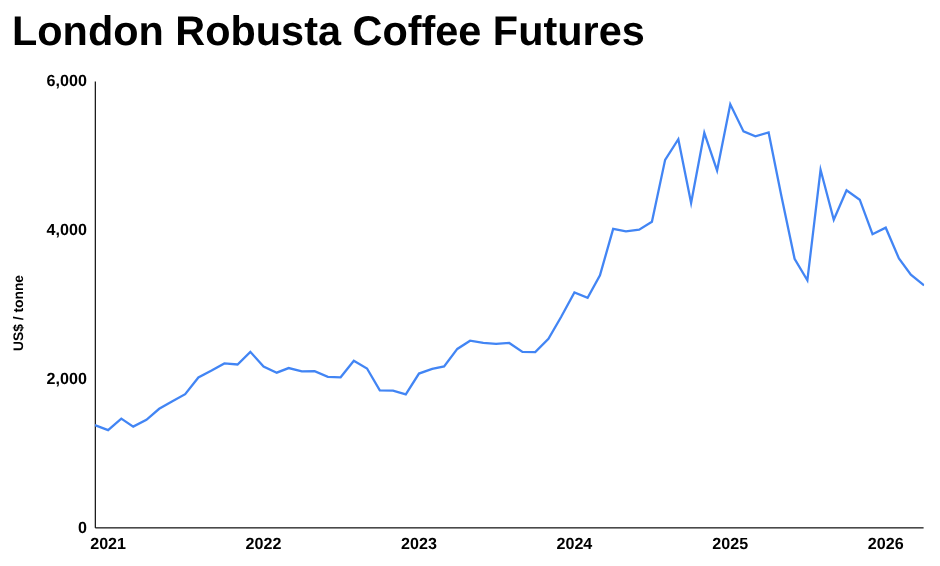
However, Qiu also noted that the continued decline in bean prices over the last month and a half or so is partly a response to the Iran war, too.
He said roasted coffee is best consumed within six months, with extended shipping times eating into the available retail window.
This is seeing buyers hold off on placing orders, waiting for transport costs to go down and shipping times to improve.
He did, however, say they can’t hold off forever and will need to start buying again soon.
“So that’s why we expect the prices to go up a little bit more,” he said, though adding the caveat that if it goes on too long, it might run into Brazil’s harvest, which would dampen any price increase.
Interestingly, Ngoc Nguyen, Vietnam Southern Region Sales Manager for HAP Commodities Consulting, which provides export support to local farmers, had a slightly different take.
She told the-shiv that the prospect of crops from Indonesia, Colombia, and Brazil entering the market may pressure Vietnamese farmers to sell down their inventories in order to free up capital to prepare for next year.
“So I think maybe there will still be a lower price than now in the short term,” she said.
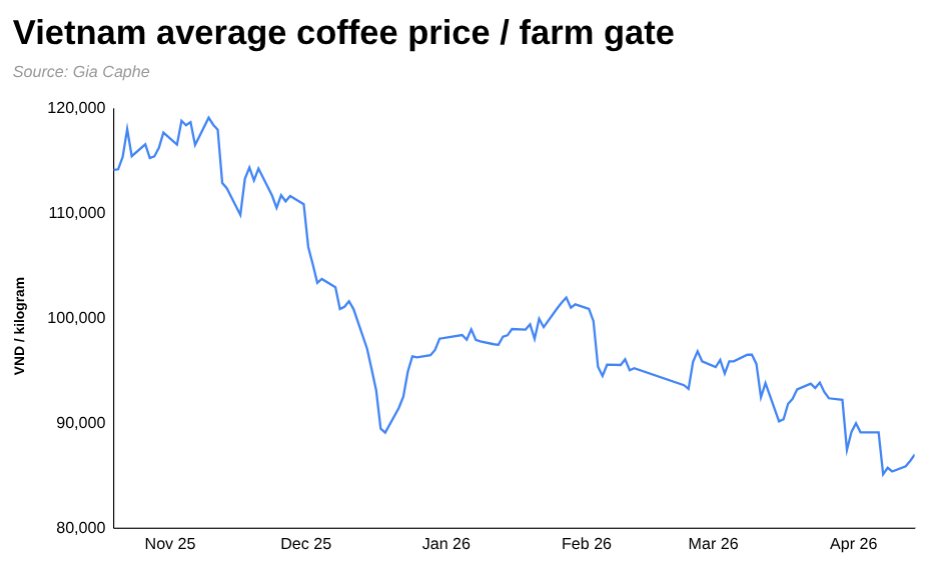
But whereas lower prices might work generally in traders’ favour, rising logistics costs are weighing on their bottom line.
Traders have contracts with prices and volumes agreed in advance, and therefore, they are expected to cover the increased logistics costs, Nguyen said.
With demand from Europe weak over the past two years, it also makes sense to absorb the cost to boost sales, in the short term, she went on to say.
“But in the long term, if the crude oil price keeps higher, we will need to discuss the logistics fee again,” she said.
Timen ter Meulen Swijtink, Founder and Managing Director of the Collective Company, a Ho Chi Minh City-based roastery known for its LaCaph-branded coffee, told the-shiv he had also seen an increase in logistics costs, though that, for the time being, it was manageable.
“But if the situation continues,” he said, “then obviously the big impact could come from the increase in fertiliser costs and input costs going up for farmers.”
“So, that’s what we’re kind of concerned about,” he said.
Those impacts, however, might already be working their way through the supply chain.
“Fertiliser is a huge issue now,” Qiu told the-shiv, going on to say prices are up by as much as 30 to 40 percent.
Nguyen also pointed out that demand for fertiliser increases at this time of year.
“Now the Vietnam crop has just passed the flowering stage… the focus is more on improving the yield, so they use a lot of fertiliser,” she said.
Of note, Vietnam’s fertiliser imports by tonnage more than doubled in March over February, with the bulk of said imports coming from China — roughly 46 percent. China, however, it was reported last month, looks set to restrict fertiliser exports, which could push up local prices even further — or, in the event of a supply crunch, could see yields fall.
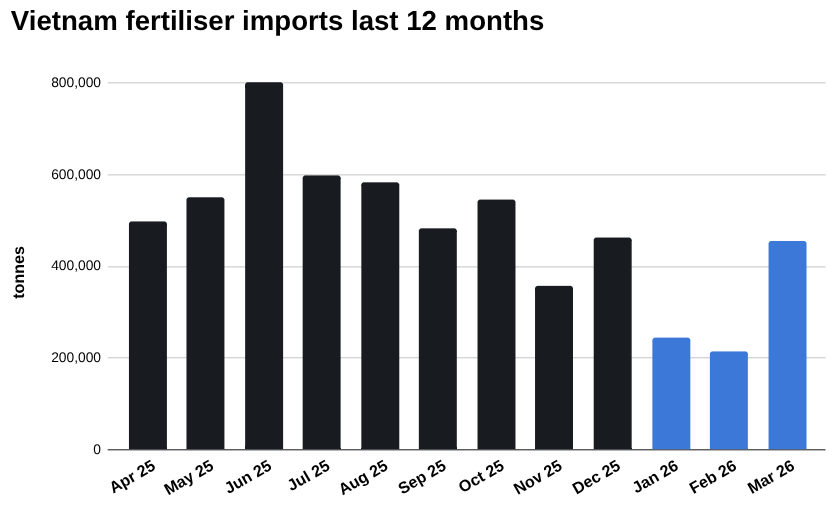
That is to say, while coffee prices are falling, input costs are rising, creating an uncomfortable paradox for Vietnam’s coffee farmers.
The narrowing of the gap between input costs and prices is, however, largely relative, according to Nguyen.
“You know, 30 years ago, the local Vietnamese coffee price was only VND 30,000 (a kilo). So now at VND 90,000, it is still triple. So even if the market goes down half, like 45,000 or 60,000, they still have a thin margin,” she said.