
Vietnam’s consumer price index (CPI) rose 0.29 percent in May from the previous month, driven primarily by higher electricity, water, housing and fuel costs, although food prices helped moderate overall inflation, according to the latest release from the National Statistics Office.
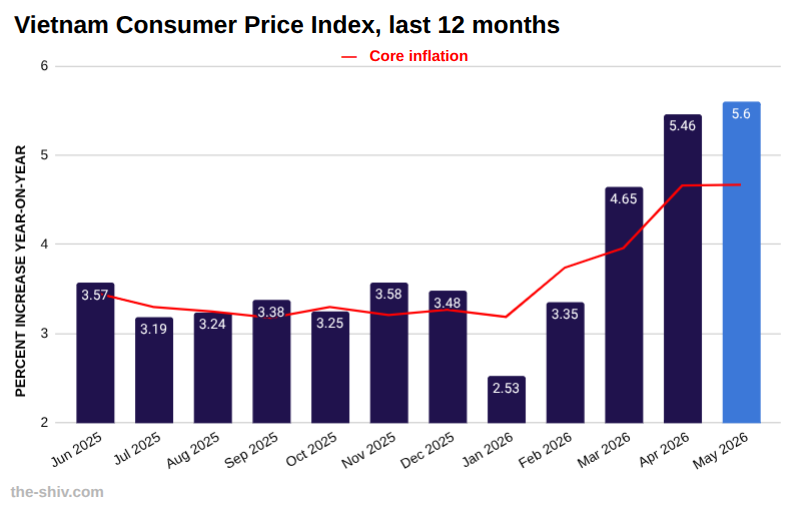
The CPI was 5.60 percent higher than a year earlier and 3.61 percent above December 2025 levels. For the first five months of 2026, average inflation stood at 4.31 percent, while core inflation averaged 4.04 percent.
Housing and utilities remained the largest source of inflationary pressure during the month. Prices in the housing, electricity, water, fuel and construction materials category rose 0.96 percent, contributing 0.22 percentage points to the overall monthly CPI increase.
Electricity prices increased 2.38 percent and water prices rose 1.41 percent as higher consumption during hot weather boosted household utility bills. Rental costs increased 0.71 percent while construction materials rose 0.81 percent.
Transport costs also contributed to inflation, with the category rising 0.83 percent during the month. Petrol prices increased 2.12 percent, although a sharp 16.42 percent decline in diesel prices partially offset broader increases across the sector.
Tourism-related services recorded notable price increases ahead of the peak travel season. The culture, entertainment and tourism category rose 0.48 percent, led by a 1.19 percent increase in package tour prices. Hotel and guesthouse prices increased 0.66 percent.
Food prices provided the main counterweight to rising costs elsewhere in the economy. The food and catering services category fell 0.14 percent during the month, reducing the overall CPI by 0.05 percentage points. Foodstuff prices declined 0.68 percent, while food products fell 0.25 percent. However, eating-out costs increased 0.36 percent.
Looking at inflation over the first five months of the year, housing and utilities remained the largest contributor to overall price growth. The category increased 6.64 percent year-on-year and accounted for 1.51 percentage points of the overall 4.31 percent inflation rate. Food and food services contributed a further 1.71 percentage points after rising 4.77 percent.
Transport prices increased 5.22 percent over the period, while education costs rose 3.28 percent and household goods and appliances increased 2.53 percent. Information and communication was the only major category to record a decline, falling 0.06 percent.
Core inflation, which excludes volatile items such as food and energy, rose 0.34 percent in May and was 4.67 percent higher than a year earlier.